Ultimate Potential
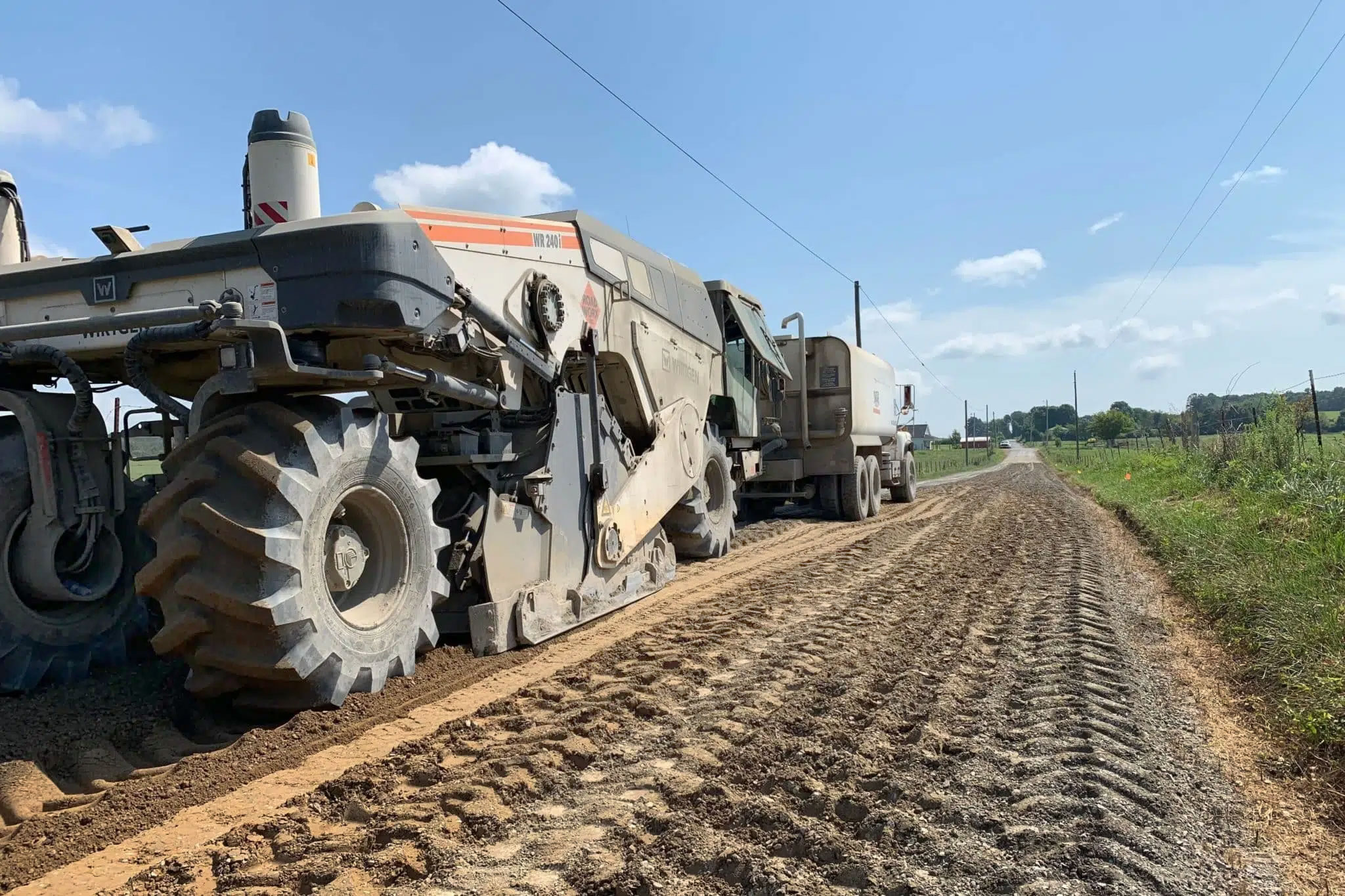
The road upgradation programme in Uttar Pradesh was undertaken to rehabilitate existing rural and district roads while addressing the region’s aggregate scarcity and reducing material haulage costs. Full Depth Reclamation (FDR) was adopted to reuse in-situ pavement layers through stabilization, improving structural capacity without dependence on new aggregates.
Translink Infrastructure Consultants Pvt. Ltd. served as the Project Management Unit (PMU), responsible for DPR preparation, job-mix design validation, construction supervision support, digital monitoring, and capacity-building to standardize FDR implementation across multiple districts.
DPR/ AE /IE /PMC
5000 km
5000
Uttar Pradesh Rural Road Development Agency
DPR/ AE /IE /PMC
5000 km
5000
Uttar Pradesh Rural Road Development Agency
Implementing FDR at state network scale required ensuring uniform technical standards across districts with varied material availability, traffic loading patterns, and construction capabilities. Existing road layers exhibited inconsistent composition and distress, requiring careful assessment before stabilization.
The need to maintain connectivity during rehabilitation and align multiple district-level contractors, labs, and PIU teams demanded strong coordination and on-ground technical support.
Translink established end-to-end technical processes including pavement condition surveys, sampling and laboratory testing, and localized job-mix design development. Trial stretches were constructed to fine-tune stabilizer dosage and compaction procedures. A digital monitoring platform (UTTAM-FDR) was implemented to track layer quality, consumption logs, and progress in real time.
Capacity-building programs were delivered for PIU engineers, contractors, and field technicians to ensure consistent execution, testing, and performance evaluation.
The FDR program delivered cost-efficient pavement rehabilitation while reducing the demand for virgin aggregates and minimizing haulage requirements. The approach improved structural strength, riding quality, and pavement life with lower lifecycle maintenance needs.
The programme also enabled the state to develop in-house expertise in sustainable pavement rehabilitation, positioning FDR as a repeatable, scalable solution for future road network upgrades.