

A Technical Perspective on How Scientific FDR Transformed Rural & State Road Networks Across India
Introduction
India’s road network—one of the largest in the world—faces a persistent challenge: maintaining and upgrading aging pavements in a cost-effective, sustainable, and time-efficient manner. Full Depth Reclamation (FDR) emerged as a transformative solution, but its successful implementation requires rigorous engineering, scientific evaluation, and multi-disciplinary coordination.
Since 2019, Translink Infrastructure Consultants Pvt. Ltd. has played a pioneering role in institutionalizing FDR across multiple states, bringing technical precision, credible methodologies, and engineering discipline to projects that today stand as national benchmarks.
From Uttar Pradesh to Himachal Pradesh, Assam, Jharkhand, and Tripura, Translink’s approach demonstrated how modern rehabilitation techniques—when executed with scientific rigor—can enhance pavement performance, reduce lifecycle costs, and significantly cut carbon emissions.
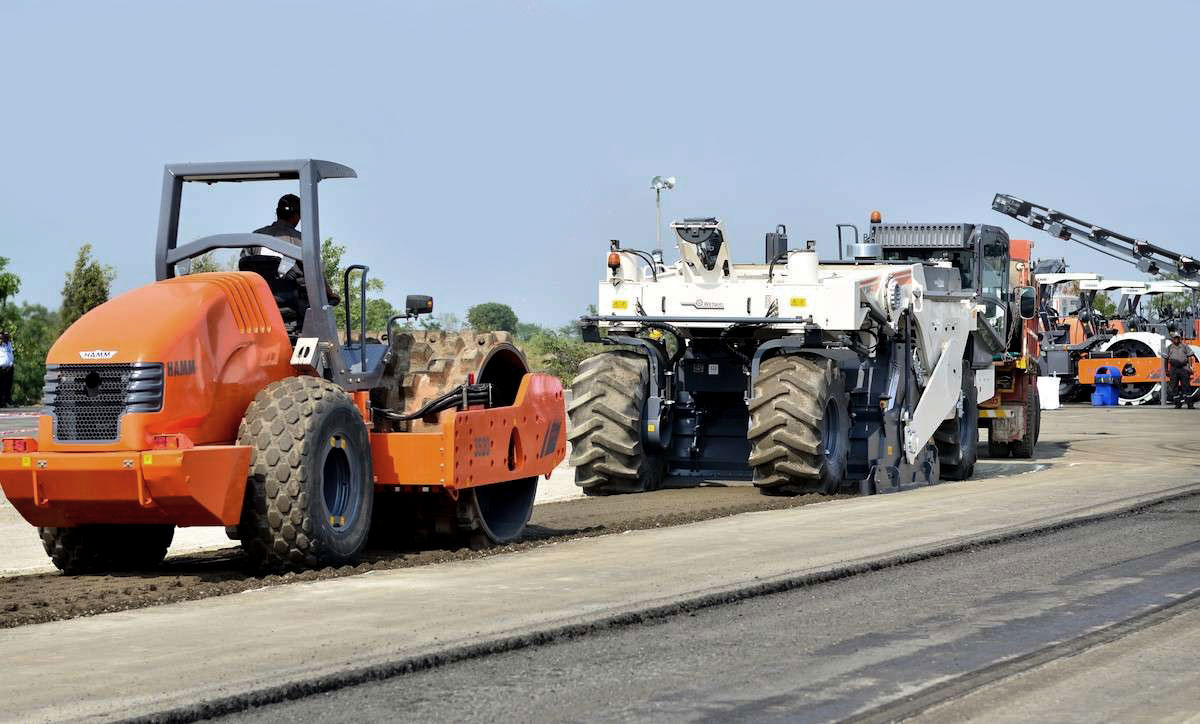
The Need for a Scientific Approach
FDR is often misunderstood as a simple field process of pulverizing existing layers. In reality, its success depends on:
- Scientific assessment of existing pavement conditions
- Layer-wise material characterization
- Laboratory mix design with stabilizers
- Evaluation against relevant IRC guidelines
- Strength prediction and durability modelling
- Construction methodology, quality protocols, and curing considerations
Translink’s methodology positioned FDR not as a cost-saving shortcut, but as a technically robust pavement rehabilitation strategy capable of delivering structural and lifecycle performance comparable to new construction.
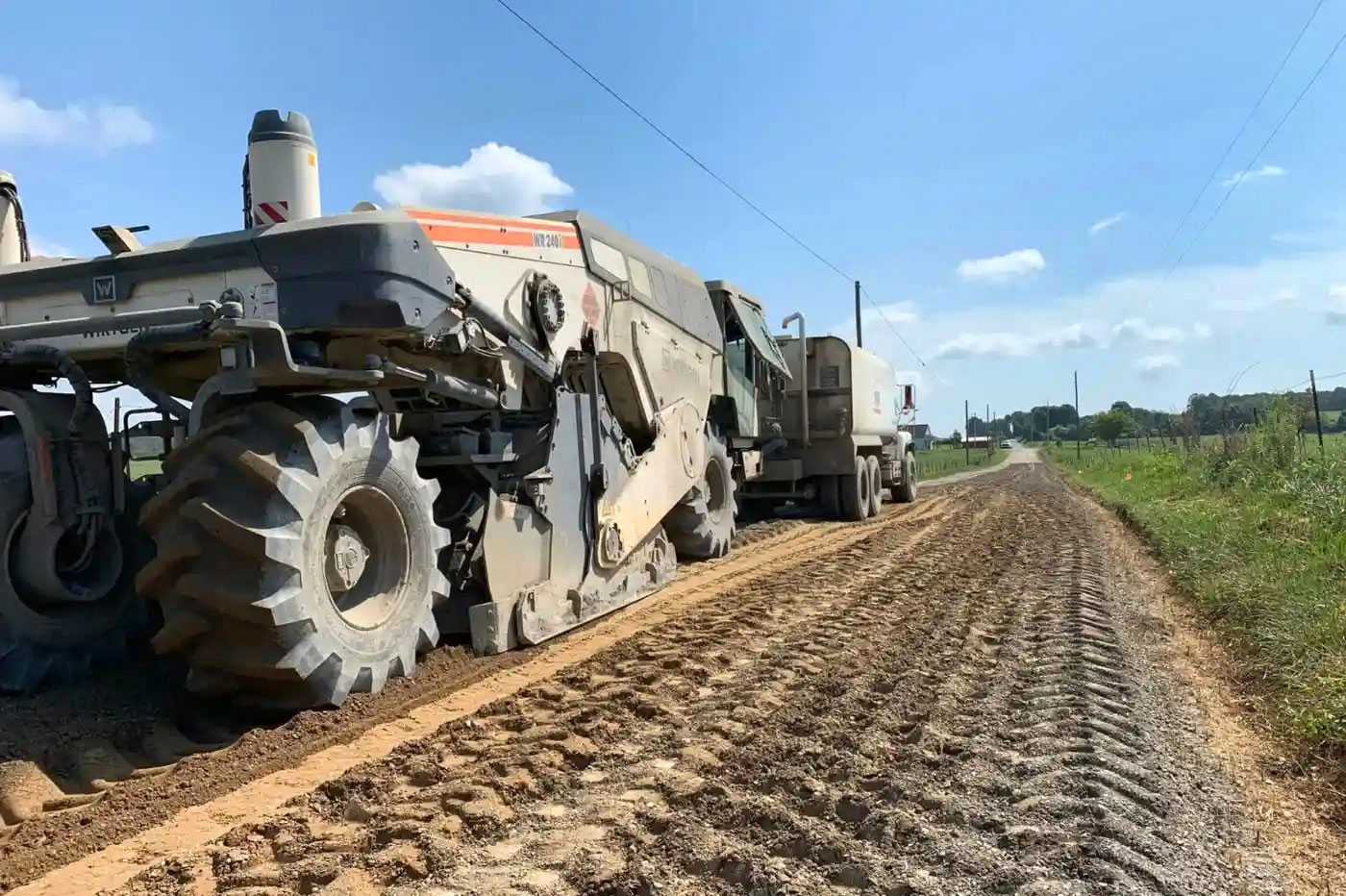
Building the Technical Foundation in Uttar Pradesh
Translink’s journey began in Uttar Pradesh, executing one of India’s largest FDR-based rural road rehabilitation initiatives under PMGSY and state programs.
The team developed:
- State-wide evaluation framework
- Standardized pavement investigation protocols
- Material reuse strategies
- Stabilizer selection guidelines
- Quality control procedures and in-situ compliance plans
These frameworks later became internal reference systems for multiple government agencies and paved the way for streamlined approvals, predictable outcomes, and large-scale replication.
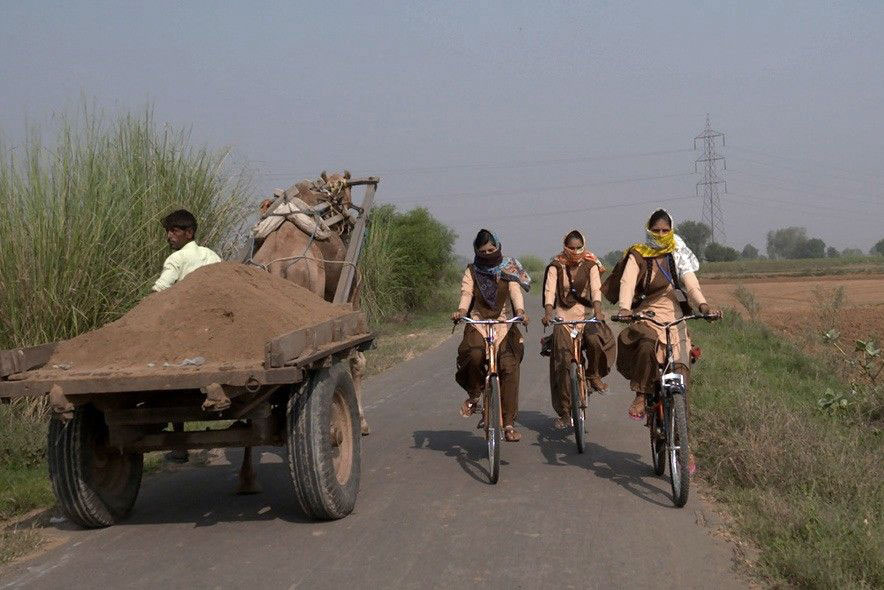
Engineering FDR in Diverse Geographies
The next frontier was extending the methodology to states with extreme, highly variable terrain and geotechnical conditions:
Himachal Pradesh
Steep gradients, drainage complexity, and cold climate required:
- Modified curing strategies
- Alternate grading envelopes
- Moisture sensitivity corrections
Assam & Tripura
High rainfall and soft subgrade conditions demanded:
- Special treatment for moisture susceptibility
- Layer stability modelling
- Dynamic compaction & drainage controls
Jharkhand
Hard crust layers and mining areas required:
- Customized pulverization energy
- Stabilizer re-dosing strategies
Across states, Translink refined the same engineering principles to work contextually, ensuring safety, durability, and operational reliability even in complex terrain.
Innovation & Technical Excellence in Execution
What sets Translink apart is its data-driven, engineering-first approach, including:
- Comprehensive pavement condition assessment using DCP, CBR, core tests, lab mix design
- Design validation against relevant IRC provisions
- Stabilizer optimization studies (cement, lime, blended options)
- Strength prediction modelling for 7-day and long-term performance
- In-situ quality protocols including density, UCS, and moisture control
- Independent verification of process compliance
This discipline is what elevated FDR from an emerging technique to a credible engineering solution in every state where Translink worked.
Environmental & Economic Impact
The multi-state FDR initiatives generated measurable, large-scale benefits:
- 70–80% reduction in fresh aggregate usage
- Significant cut in transportation-related emissions
- Reduced project cost by reusing existing materials
- Construction speed increased, reducing public inconvenience
- Extended pavement lifecycle due to improved structure
- Lower carbon footprint, aligning with national sustainability goals
These outcomes align perfectly with India’s transition towards low-carbon infrastructure and responsible engineering.
A Model for Future Pavement Rehabilitation
Today, Translink’s FDR frameworks are recognized for:
- Technical rigor
- Implementation discipline
- Context-based engineering judgement
- Scalability across geographies
- Consistent performance
The organization’s engineering expertise now contributes to shaping the next generation of pavement rehabilitation programs—where sustainability, lifecycle costs, and structural performance converge.
Conclusion
Translink’s work in FDR across multiple states demonstrates how technical excellence, scientific process, and engineering integrity can convert a rehabilitation technique into a national capability.
By prioritizing rigorous evaluations, innovation, and sustainability-driven design, Translink has helped India adopt a pavement rehabilitation approach that is faster, greener, and structurally superior.
This is not just project delivery—
it is engineering leadership shaping sustainable mobility for tomorrow.