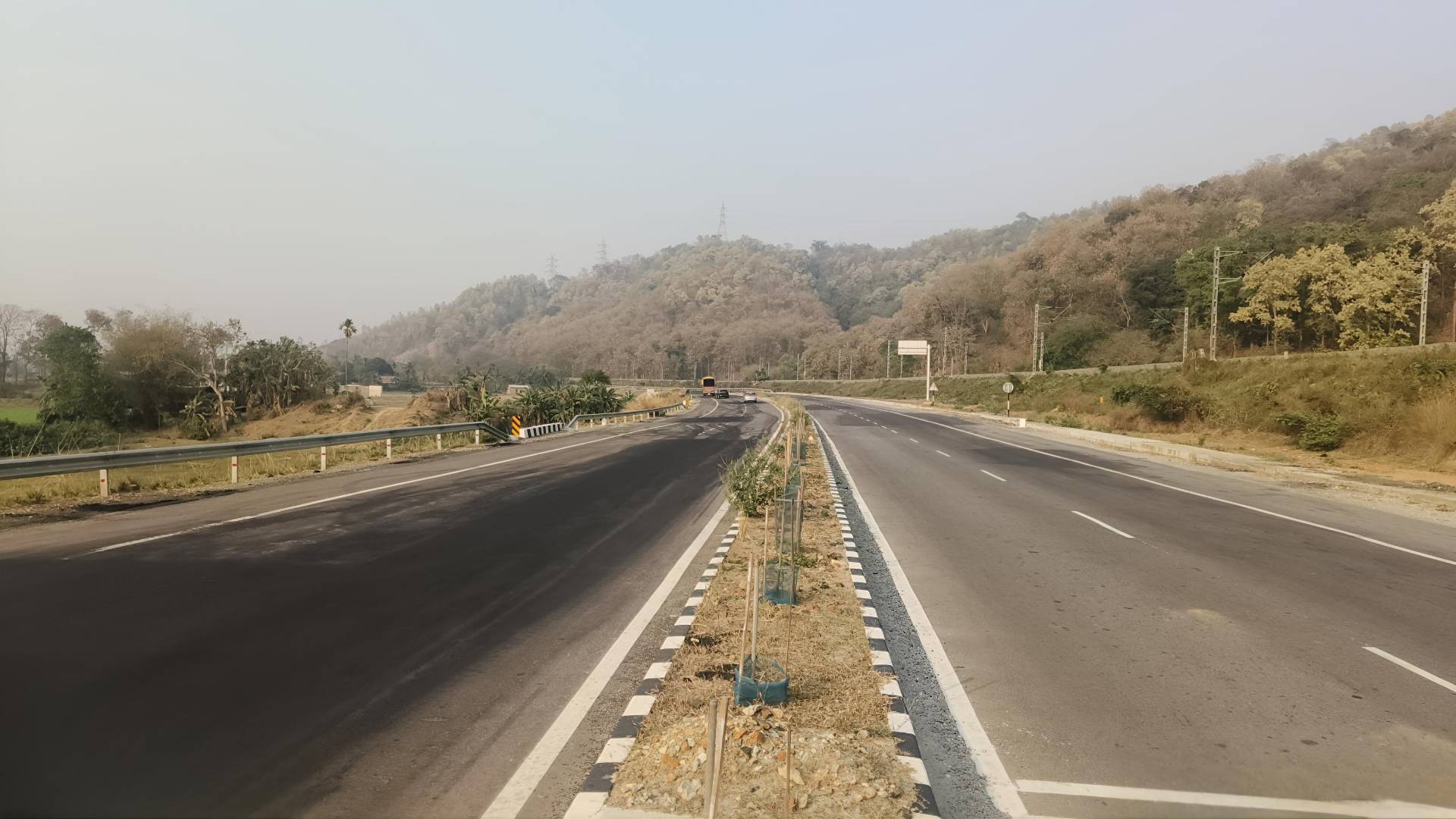
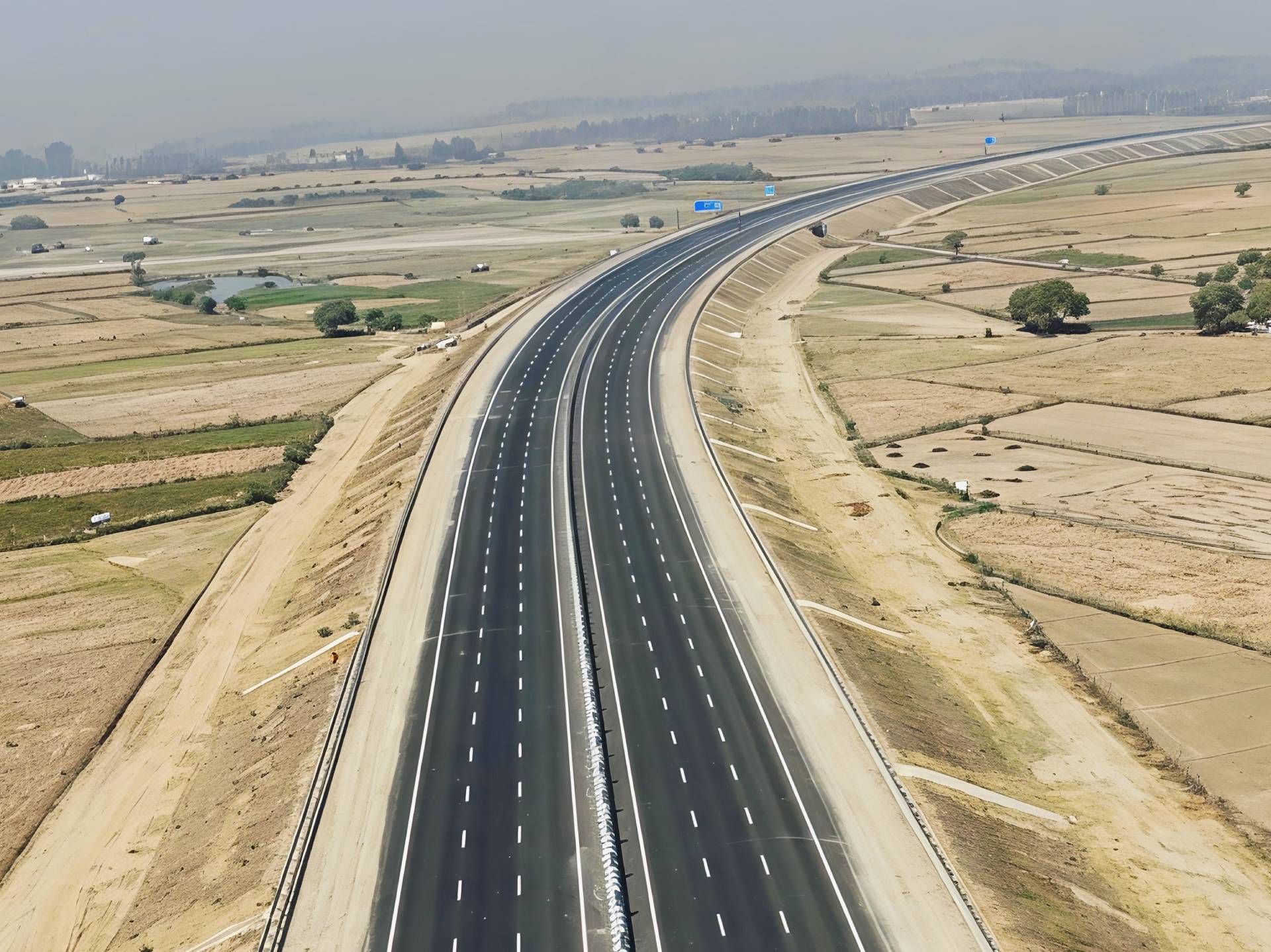
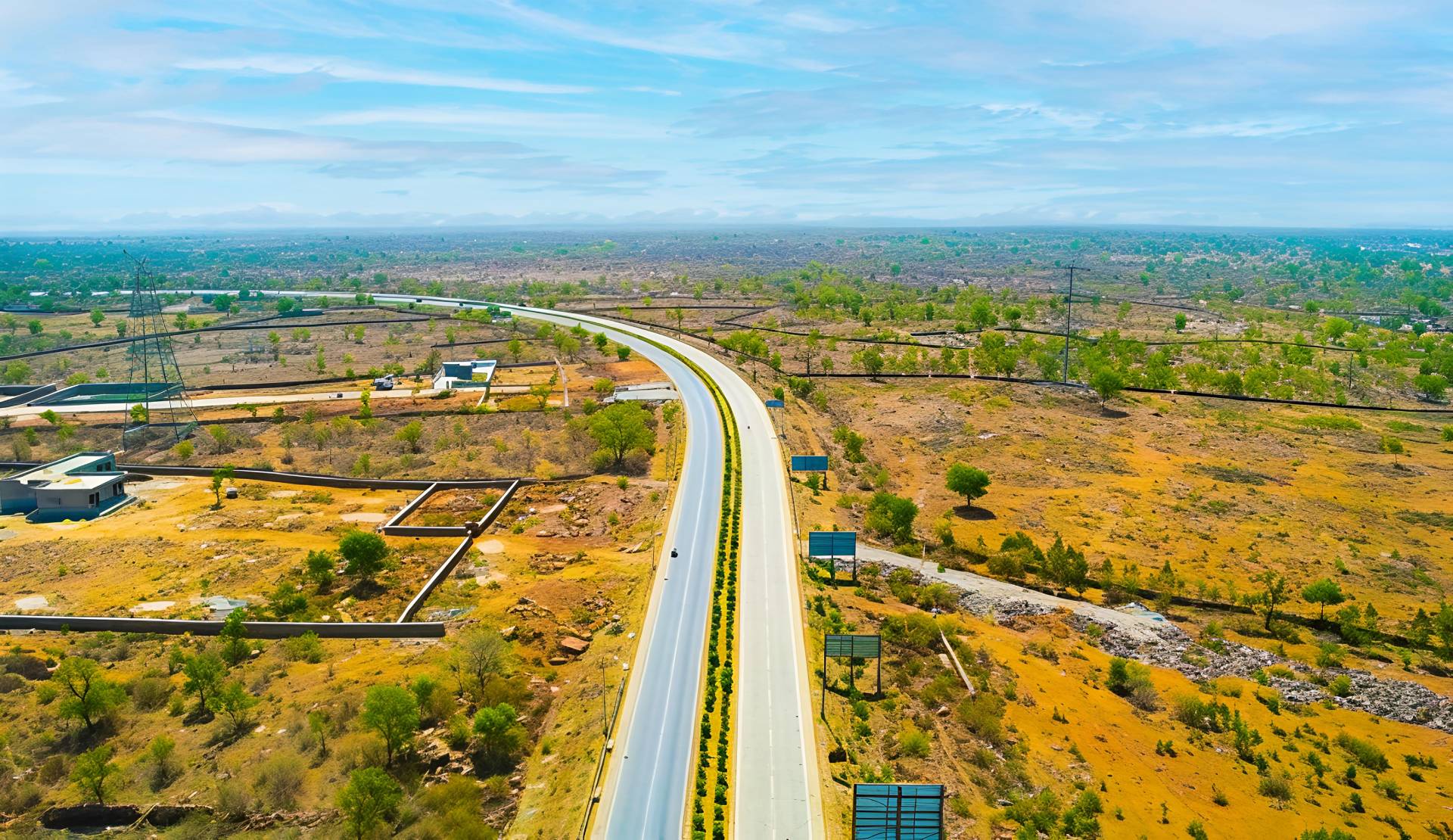
The Gadu–Porbandar section of NH8E forms an important coastal link in Gujarat and was taken up for widening to enhance corridor capacity. Translink was appointed as the detail design consultant for the project, with the responsibility to deliver a technically sound and construction-efficient design solutions.
As part of this assignment, our focus was to develop a design framework that optimised material use, supported the contractor’s execution planning, and ensured pavement durability in line with the project’s design life and traffic requirements.
Scope of Work
Detail Design
Corridor Length & Configuration
93.5 km & 2/4 lane
Estimated Project Cost (Cr)
533
Client & Authority
Kalthia Engineering & Construction Limited & National Highways Authority of India
Scope of Work
Detail Design
Corridor Length & Configuration
93.5 km & 2/4 lane
Estimated Project Cost (Cr)
533
Client & Authority
Kalthia Engineering & Construction Limited & National Highways Authority of India
Challenges
A key challenge in the assignment was the need to achieve maximum material economy in the pavement layer works without compromising on performance. This required careful evaluation of stretches where recovered material could be gainfully utilised to reduce fresh bitumen consumption.
A second challenge emerged from sections with weak soil conditions, where the low subgrade strength posed long-term durability concerns for the widened pavement. Balancing cost efficiency with structural reliability became central to the design exercise.
Solutions
To address the material optimisation requirement, sections with suitable existing bituminous layers were evaluated for RAP incorporation, allowing part of the recovered material to be reused within the new bituminous layers. This selective adoption provided measurable savings while maintaining mix performance.
For stretches with poor subgrade strength, ground improvement strategies were proposed to enhance CBR and establish a stable foundation for the finished pavement. This combination of targeted RAP usage and engineered soil improvement ensured the design remained both economical and structurally robust.
Impact
The final design enabled notable material savings for the client through RAP usage and reduced dependence on new aggregates, while the strengthened subgrade ensured long-term pavement performance across weaker reaches.
Overall, the project benefited from a cost-efficient, durable pavement solution well-aligned with the operational needs of the corridor.