

An operational highway is more than a road carrying vehicles. For an infrastructure investor, it is a long-duration revenue asset shaped by economic growth, freight patterns, commuter behaviour, competing corridors, future infrastructure, tolling dynamics and regional development.
The real question is therefore not simply: “How much traffic uses this road today?” It is: “How much of that traffic is sustainable, what drives it, what can disrupt it, and how reliably can it translate into future revenue?”
That was the central challenge behind the traffic due diligence undertaken by Translink for the Raajmarg Infrastructure Investment Trust (Raajmarg InvIT).
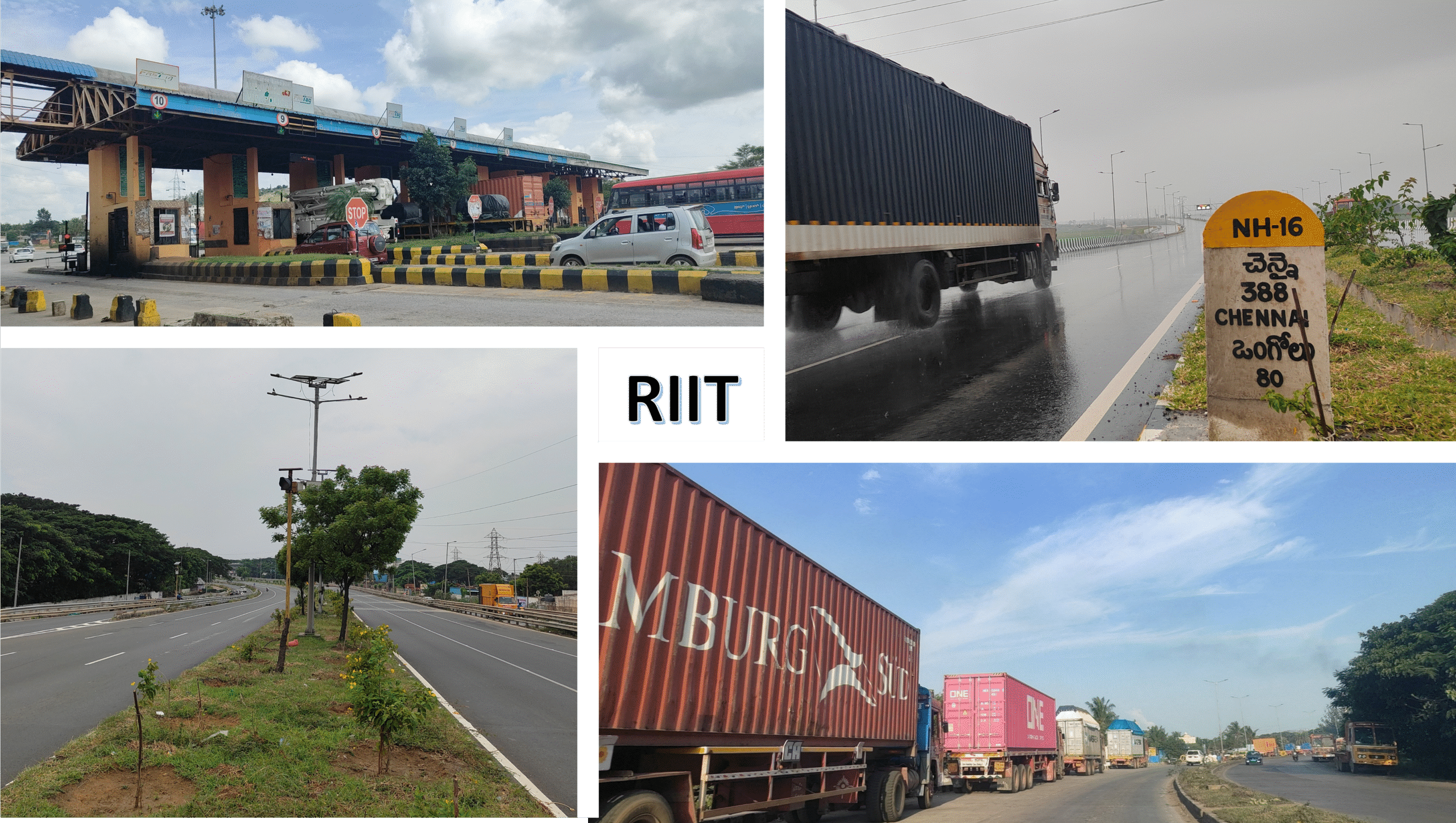
Five Highways. Five Demand Stories. One Investment Thesis.
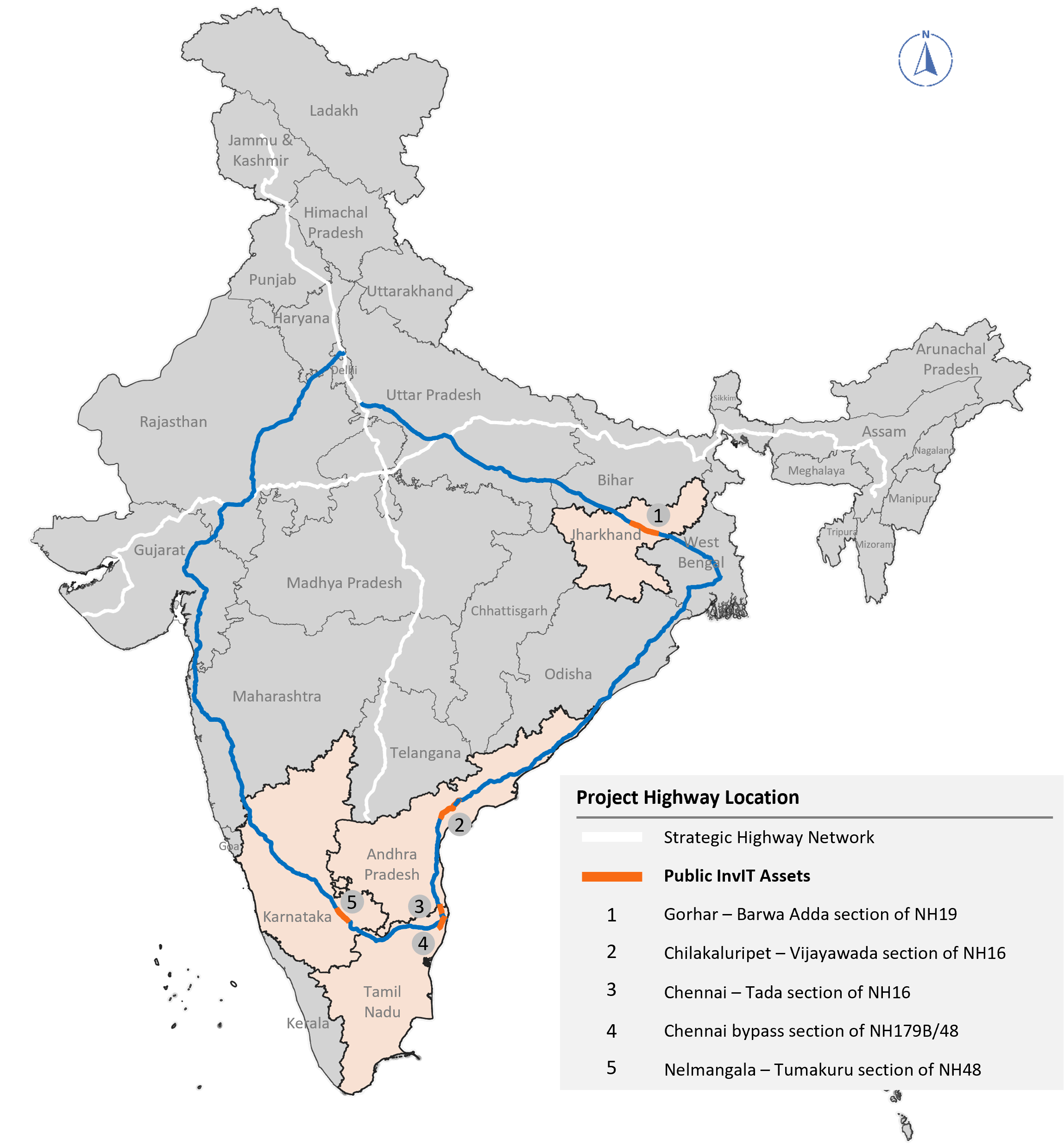
The portfolio brought together five brownfield highway assets across Jharkhand, Andhra Pradesh, Tamil Nadu and Karnataka — Gorhar–Barwa Adda, Vijayawada–Chilakaluripet, Chennai Bypass, Chennai–Tada and Nelamangala–Tumakuru — with a combined length of about 258 km.
The complexity of portfolio-level highway diligence is that no two roads derive their value in the same way. A freight-heavy industrial corridor in eastern India behaves differently from an urban bypass around Chennai. A port-linked highway responds differently to global trade cycles than an agriculture-led corridor. An expanding Bengaluru approach road carries a different set of network and capacity risks.
The challenge was therefore not to apply one forecasting model five times. It was to understand five distinct economic systems and translate them into one coherent portfolio-level view of traffic and revenue risk.
The Assignment: Converting Traffic into Investment Intelligence
Traffic due diligence for an investment asset begins where a conventional traffic study often ends. Translink’s assignment combined field intelligence, historical datasets, behavioural analysis, economic modelling, network assessment and revenue-risk analysis into an integrated framework.
The work included review of historical traffic and revenue, continuous classified counts, origin–destination and commodity surveys, axle-load surveys, site visits and stakeholder consultations, toll-rate assessment, diversion analysis, long-term traffic and revenue forecasting, and scenario development.
A traffic forecast is not an estimate of vehicles.
It is a view of economic behaviour under uncertainty.
Translink’s Due-Diligence Lens
1. Establishing a Defensible Baseline
The first task was to determine what could genuinely be trusted. Historical toll records, ETC transactions, survey observations and revenue information were reviewed for consistency. Independent field surveys were used to validate reported traffic, understand ticket behaviour and reconcile the base year. Even a sophisticated forecast is only as reliable as its starting point.
2. Understanding Why the Traffic Exists
Traffic grows because people travel, factories produce, farms dispatch goods, ports handle cargo, cities expand and supply chains change. Origin–destination surveys, commodity movement, trip length, vehicle category and influence-area analysis were used to identify the economic purpose behind traffic — allowing each corridor to be understood as part of a larger economic ecosystem.
3. Connecting Highways with the Economy
Traffic growth was linked with measurable economic drivers such as GDP/GSDP, per-capita income, population, industrial activity and corridor-specific economic variables. Econometric relationships were combined with transportation-engineering judgement to develop vehicle-category-specific growth assumptions. The objective was not to find the highest growth rate; it was to identify a defensible relationship between economic activity and road demand.
4. Forecasting the Roads That Do Not Yet Exist
Long-duration highway value can change when a new expressway, ring road, port connector, freight corridor, metro system or logistics park becomes operational. The diligence mapped future infrastructure developments, assessed their probability and timing, identified the vehicle categories likely to respond, and incorporated induced and diverted traffic effects into the forecasts.
5. Moving Beyond a Single Forecast
For an investor, one number is rarely enough. The more relevant questions are what happens if growth slows, a competing corridor opens earlier, freight composition changes, or capacity becomes constrained. Scenario-based forecasts and sensitivity analysis were therefore used to make uncertainty visible, measurable and understandable.
From Technical Due Diligence to Investor Dialogue
An investment-grade study is ultimately tested not only in the report, but in the questions it receives. During the transaction process, Translink supported stakeholder and investor engagement by addressing technical queries around traffic behaviour, growth assumptions, competing corridors, freight exposure, revenue visibility and asset-specific risks.
This required translating complex transportation analysis into a form that investors, advisers and transaction stakeholders could interrogate and understand — without diluting the technical rigour behind the assumptions.
DATA
BEHAVIOUR
ECONOMY
RISK
CONFIDENCE
When Engineering Meets Capital
The Raajmarg InvIT public issue of approximately ₹6,000 crore was subsequently listed, with the offering receiving about 14× subscription. For Translink, the significance of the assignment went beyond the transaction outcome: it demonstrated what happens when engineering intelligence is carried all the way through to investment decision-making.
The transaction cycle also placed the technical team in direct dialogue with the wider capital-markets ecosystem — an increasingly important capability as operating infrastructure moves through InvIT, TOT, concession and other monetisation structures.

What This Case Reveals About Infrastructure Monetisation
1. Traffic is ultimately an economic story
Vehicle counts are the visible outcome. Industry, agriculture, trade, urbanisation, logistics and consumer behaviour are the underlying causes.
2. Forecast credibility depends on understanding downside
Investment-grade diligence is not about producing the most attractive forecast. It is about understanding what can change the forecast — and by how much.
3. Technical consultants must increasingly communicate with capital
As infrastructure moves through monetisation structures, engineering analysis must withstand scrutiny from investors, lenders, advisers, developers and asset managers. That requires technical depth and transaction fluency.
The Translink Approach to Asset Monetisation
Asset Familiarisation
Understand the highway, network, users, economy and operating environment.
Traffic Due Diligence
Validate historical performance through independent field and data analysis.
Economic & Network Intelligence
Identify the real drivers of traffic and emerging infrastructure risks.
Traffic & Revenue Forecasting
Develop long-term projections grounded in economics and network behaviour.
Revenue-Risk Assessment
Test diversion, growth, capacity and other critical assumptions through scenarios.
Investor & Transaction Support
Explain assumptions, answer diligence queries and convert technical analysis into decision-ready insight.
What Truly Distinguishes Translink’s Approach
Engineering + Investment Lens
Technical analysis translated into investment relevance.
Bottom-Up Traffic Intelligence
Field surveys, ETC data, OD behaviour, commodities and ticket patterns.
Economy-Led Forecasting
Linking traffic growth to the economic engine behind each corridor.
Network Risk Intelligence
Quantifying the influence of competing and future infrastructure.
Revenue-Risk Translation
Moving beyond traffic forecasts to revenue visibility and downside assessment.
Multi-Asset Portfolio Thinking
Understanding how different corridor risks behave together.
Investor-Facing Technical Clarity
Defending assumptions and explaining complexity without losing rigour.
Lifecycle Infrastructure Advisory
Supporting assets from development and operations through monetisation and investment.
Conclusion: Trusted Where Infrastructure Meets Investment
Infrastructure monetisation changes the question asked of an engineer. It is no longer enough to know how a highway performs today. We must understand why it performs, how it may change, what can disrupt it, and what that means for capital committed over the long term.
The Raajmarg InvIT journey brought transportation engineering, economics, risk assessment and investor dialogue into one assignment. For Translink, it represents the role we increasingly seek to play: a trusted technical partner wherever infrastructure decisions carry long-term investment consequences.